10 Simple Ways to Streamline Grocery Shopping and Meal Planning for Busy Families
If grocery shopping and meal planning feel more like chores than time-savers, you’re not alone. Many busy families struggle to find a balance, often spending too much time, effort, or money just to get meals on the table.
The good news? A few simple strategies can transform the chaos into a manageable routine. By streamlining grocery shopping and meal planning, you can cut costs, reduce stress, and even prevent food waste.
For instance, using tools like a weekly meal plan can help organize your week with ease.
Set Clear Goals for Meal Planning
Meal planning isn’t just about choosing recipes; it’s about creating a system that fits your family’s unique needs and preferences. Setting clear goals can make the process more efficient and enjoyable.
Whether it’s saving money, focusing on nutrition, or simply reducing the stress of last-minute decisions, defining your approach makes all the difference.
Table of contents
Identify Family Favorites and Staples
Having a list of tried-and-true family favorites simplifies meal planning. It’s like having a go-to playlist you know everyone loves. By identifying meals your family consistently enjoys—like spaghetti night or taco Tuesdays—you can create a foundation for your weekly menu.
Here’s how you can get started:
- Create a running list: Write down meals your family loves and categorize them by main ingredient (e.g., chicken, beef, vegetarian). This makes it easier to rotate meals while keeping variety.
- Lean on staples: Keep key ingredients like rice, pasta, and canned goods stocked. Knowing you have the basics on hand minimizes trips to the store.
- Involve the family: Ask family members what they enjoy most. Including their input ensures everyone is excited about meal times.
For more help with making this process smooth, check out our simple Weekly Meal Planning Spreadsheet, which offers tools to organize meals and your grocery list effectively.
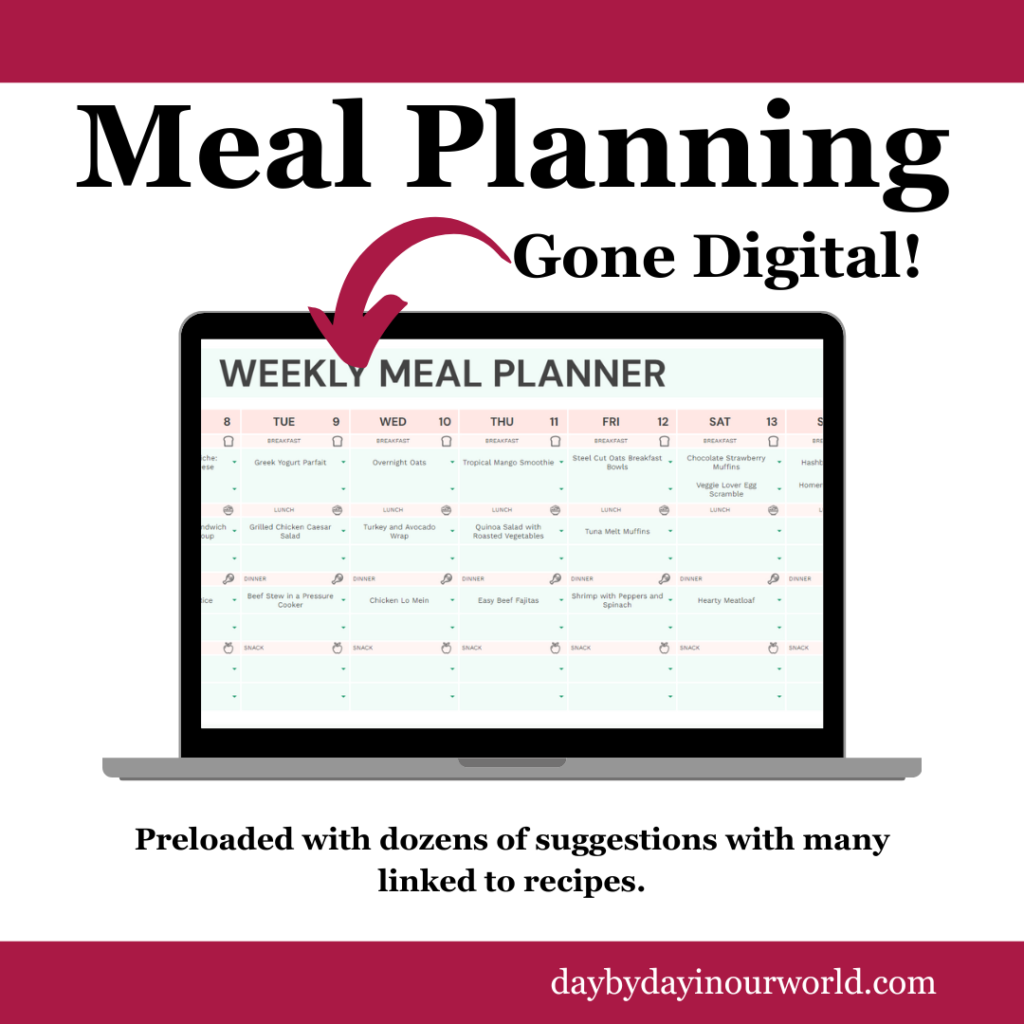
Simple Meal Planning Spreadsheet
Simplify your meal planning with our basic spreadsheet.
Links to several recipes are included!
Incorporate Variety and Nutrition
Sticking to the same meals week after week can feel monotonous, and it may not meet all your dietary needs. Incorporating variety not only keeps everyone interested but also ensures your family is getting a range of nutrients.
Here are some ways to balance your menu:
- Rotate cuisines: Add flavor by including meals inspired by different cultures—like Italian pasta dishes, Mexican burrito bowls, or Asian stir-fry.
- Mix up proteins: Incorporate a blend of lean meats, fish, eggs, beans, and tofu across the week for balanced nutrition.
- Include more veggies: Aim to fill half of your plate with vegetables and experiment with roasting, steaming, or adding them to soups and stews.
- Plan snacks too: Don’t forget to include healthy, easy-to-grab snacks like fruits, nuts, or yogurt.
For further tips and ideas, the Beginner’s Guide to Meal Planning is a great resource to explore.
By identifying your family’s favorite dishes and mixing in variety, meal planning becomes less of a chore and more of a tool that works for you.
Leverage Meal Planning Tools and Templates
When it comes to making meal planning as easy as possible, having the right tools can make all the difference. Whether you prefer a digital solution or a physical template, structured tools save time, keep you organized, and make grocery shopping a breeze. Here’s how you can use these tools effectively.
Use Digital or Printable Templates

Photo by Ivan Samkov
Using templates, whether digital or printable, gives your meal planning consistency and clarity. A well-designed template is like a blueprint for your week—it outlines meals, organizes recipes, and streamlines the process from start to finish.
Many people find printable planners appealing because they offer a tangible way to jot down plans and easily glance at them throughout the week. If you like crossing things off with a pen, this method might be perfect for you.
Prefer to go digital? Apps and online templates allow you to access meal plans on your phone or tablet, syncing them directly with your calendar or grocery lists. Canva provides customizable meal planner templates that can suit any style or preference, while platforms like Workweek Lunch offer user-friendly tools tailored for beginners.
The power of templates lies in their simplicity. Whether you stick it on your fridge or keep it in your pocket, they make meal planning accessible and easy.
Simple Meal Planning Spreadsheet
Simplify your meal planning with our basic spreadsheet.
Links to several recipes are included!
Explore Subscription Services
If you’re looking for a more hands-off approach, meal planning subscription services can take the heavy lifting off your plate. These services often provide pre-made meal plans, customizable templates, and even grocery lists—all designed to save you time and energy.
For instance, Build a Menu is a fantastic resource that simplifies not only the planning phase but also the execution. It reduces stress and offers diverse meal ideas for families. You can read more about its benefits and how it works here: Take the Pain Out of Meal Planning with Build a Menu.
Considering a service like this is especially useful if you have a busy schedule and don’t want to spend hours crafting a menu from scratch. Plus, these platforms often cater to specific dietary preferences, ensuring your plans are not only convenient but also aligned with your needs.
Meal planning becomes much easier when you leverage the tools available to you. Whether through templates you love or a subscription service that does the hard work, staying organized can transform your weekly routine.
Streamline Grocery Shopping with a Master Grocery List
A master grocery list is like your personal shopping blueprint. It’s a detailed list of all the essential items your family uses regularly.
By creating one, you save time and stress during weekly shopping because it’s comprehensive and tailored to your needs.
Think of it as a cheat sheet that keeps you organized and ensures no ingredient is forgotten. This is particularly helpful for anyone who identifies as neurodivergent.
Organize By Store Layout

Photo by Kampus Production
Organizing your master grocery list based on your store’s layout can significantly speed up your shopping trip. If you usually wander aimlessly looking for items, then this method will change how you shop. Divide your list into sections such as:
- Produce: Fruits, vegetables, herbs.
- Dairy: Milk, cheese, yogurt.
- Meat: Poultry, beef, fish.
- Dry Goods: Cereal, pasta, canned goods.
- Frozen Foods: Vegetables, pizzas, dessert treats.
- Bakery: Bread, bagels, pastries.
When you match your list with the store’s layout, you cut back on unnecessary trips back and forth. It’s like following a map instead of guessing the route. For families, this is particularly helpful when shopping with kids or in a time crunch.
For more ways to simplify meal prep and shopping stress, check out Freezer Meal Prep for Less Stress at Dinner Time to streamline your planning even further.
Include Commonly Forgotten Items
No matter how seasoned a shopper you are, it’s easy to forget the basics. We all know the sinking feeling of going home only to realize we forgot milk or eggs. Include a section in your master list for commonly forgotten items to save yourself some last-minute trips:
- Spices and seasonings (e.g., salt, pepper, paprika).
- Condiments (ketchup, mustard, soy sauce).
- Staples like sugar, flour, and cooking oil.
- Dairy essentials such as butter and cream.
- Snacks for kids (or adults!).
- Cleaning supplies (sponges, trash bags, dish soap).
This checklist serves as a fail-safe so you don’t have to second-guess whether you’ve got everything.
If you’re looking for inspiration on how to build a more effective master list, the guide on How to Build a Master Grocery List can give you additional tips and ideas.
A master grocery list isn’t just a time-saver; it’s a sanity-saver too. By organizing the list logically and accounting for frequently overlooked items, you’ll streamline your routine and make grocery shopping something you can actually look forward to.
Plan for Leftovers and Freezer Meals
Meal planning isn’t just about the meals you’re going to make—it’s also about how to maximize what you already have. Incorporating leftovers and planning for freezer meals can save you time, money, and stress throughout the week.
With the right techniques, you can turn yesterday’s dinner into tomorrow’s success story.
Batch Cooking Ideas: Examples of Meals to Cook in bulk and Freeze for Later Use
Cooking in batches isn’t just smart—it’s a lifesaver for busy weeks.
By preparing food in larger quantities, you save time on cooking and cleaning while ensuring well-thought-out meals are always at your fingertips.
Freezer meals, in particular, are perfect for those hectic days when spending an hour in the kitchen simply isn’t an option.

Cincinnati Chili
Consider these freezer-friendly ideas:
- Soups and stews: Recipes like our family-favorite Crock-Pot Red Beans and Rice can be made in large batches, divided into portions, and frozen for simple reheat-and-eat meals.
- Casseroles: Dishes like Mexican Chicken and Rice Casserole are fantastic because they freeze and reheat beautifully while providing a comforting dinner option.
- Meatballs: Try Crock-Pot Swedish Meatballs or your own recipe. These are versatile and can be served over pasta, rice, or even as sliders.
Planning for freezer meals not only helps avoid last-minute takeout but also encourages portion control and reduces food waste. Anytime we make meatloaf, we serve one for dinner and freeze the other for the future.
If you’re looking to stock up your freezer efficiently, check out How to Prep 2 Weeks of Freezer Meals in 3 Hours for inspiration.
Repurpose Leftovers Creatively: Provide tips on turning leftovers into new meals to reduce waste
No one enjoys eating the same dish repeatedly, but with a little creativity, your leftovers can transform into something entirely new. Think of leftovers as building blocks for fresh meals instead of a repetition of last night’s dinner.
Here are some ideas:
- Transform roasted chicken: Turn yesterday’s roast into shredded chicken tacos, a pasta salad filler, or a hearty chicken soup.
- Use extra rice: Plain rice can become fried rice, rice pudding, or a flavorful ingredient in stuffed bell peppers.
- Reimagine vegetables: Leftover roasted veggies can be blended into a creamy soup, added to omelets, or used as pizza toppings.
Planning ahead to use leftovers is not only smart but also budget-friendly. Consider meal planning strategies like Maximizing Leftovers to streamline your weekly grocery efforts while preventing waste.
A few uses I’ve shared in the past include Meatloaf & Noodles as well as Cowboy Cups using Chili.

Repurpose Leftovers: Meatloaf & Noodles
These small changes can bring big benefits, especially when you tie them into your weekly routine.
By focusing on batch cooking and creatively reusing leftovers, you’re not just feeding your family—you’re saving time and money, reducing waste, and adding a little variety into everyone’s diet.
Shop Smart and Save Money
Grocery shopping doesn’t have to drain your wallet. With a little planning and strategy, you can make the most of your trips while sticking to your meal plans.
Saving money while shopping smart simply requires knowing where to look for deals and how to make purchases that maximize your budget.
Below are some practical ways to shop wisely.
Compare Weekly Deals and Store Flyers

Photo by Helena Lopes
Before stepping foot in the store, take a few minutes to browse weekly flyers or online deals from your local grocery stores. Flyers aren’t just paper junk—they’re loaded with hidden treasures waiting to save you money. Many retailers also have apps where you can digitally clip coupons, see sales, and even compare prices between nearby stores.
- Check for overlapping discounts: Look for items already on sale that you can pair with coupons. For example, a sale on chicken thighs plus a brand coupon may reduce the cost significantly.
- Stay meal-plan focused: Temptation is everywhere, but if your plan calls for stir-fry, don’t impulse-buy frozen pizza just because it’s on sale. Stick to your list!
- Shop seasonal items: Fresh fruits and veggies in season are not only more affordable but often higher in quality.
By using these tools strategically, you avoid overspending while ensuring you have everything you need.
For more savings, browse tips on keeping meal planning and shopping affordable at Eating Healthy on a Budget.
Buy in Bulk Strategically
Buying in bulk can stretch your dollars further, but only if done thoughtfully. It’s easy to get excited about a discount on a 20-pound bag of quinoa, but if no one in your family eats it, it’s money wasted.
Bulk purchasing works best when you know you’ll use the item regularly and it won’t go bad before you do.
Here’s how to buy in bulk without regret:
- Stick to staples: Focus on items you use daily or weekly, like rice, pasta, beans, or paper goods. These items will always find a purpose in your home.
- Consider shelf life: Non-perishables like canned goods, spices, and baking essentials are great bulk buys. But avoid buying perishables in large quantities unless you can freeze or preserve them.
- Split with friends or family: Sometimes, the only option for a bulk discount is a huge quantity. Sharing items like meat or pantry ingredients with others can help reduce costs without waste.
Keep in mind, buying larger quantities at a lower price per unit doesn’t always mean saving—compare total costs and budget accordingly. Incorporating bulk shopping into your weekly habits is another fantastic way to control family meal expenses.
For example, you might find creative uses for purchases through posts like Simple Hacks for the Best Road Trip Ever, which emphasize saving by thinking ahead.
By comparing deals and making thoughtful bulk buys, you’ll save money while sticking to a meal plan everyone enjoys. These small changes will have a big impact on your grocery budget over time.
Utilize Time-Saving Grocery Shopping Tips
Time is precious, especially when it comes to managing a busy family schedule. Grocery shopping, which seems straightforward, can easily chip away at your day if not optimized.
By adjusting your routine and utilizing modern conveniences, you can transform grocery trips into quick, stress-free tasks.
Here are two simple yet highly effective ways to save time.
Shop During Off-Peak Hours
Timing is everything when it comes to grocery shopping.
Ever find yourself stuck in a slow-moving checkout line or maneuvering through crowded aisles, all while watching the clock? Shopping during off-peak hours can make your experience more efficient and enjoyable.
Why shop during slower times?
For starters, it minimizes distractions and allows you to move through the store quicker. Weekday mornings or late evenings often see fewer customers, meaning shorter lines and less competition for popular items.
For parents, shopping without a bustling store environment reduces stress—no wrangling kids while dodging oversized carts!
Here’s a tip: Many stores stock shelves overnight, so shopping early in the morning can also ensure you get the freshest produce, dairy, and bakery items.
Adjusting to off-peak shopping is a simple habit with big payoffs, saving you valuable minutes every visit.
For more ideas on how to simplify your everyday routine, check out How to Beat Stress This Holiday Season, which offers actionable tips that extend beyond just the holidays.
Use Online Shopping and Pickup Services
Online shopping and curbside pickup are game-changers for busy households. Gone are the days of circling the parking lot or juggling a kid-filled cart while trying to read a grocery list.
With just a few clicks, you can skip the store altogether and reclaim hours of your week.
Here are the highlights:
- Save time: Placing an order online gives you full control over what you buy, minus the impulse purchases. Many apps let you save past purchases or favorite items, speeding up reordering.
- Stick to your budget: Shopping online helps you clearly see the running total, making it easier to avoid overspending.
- Curbside convenience: Pickup services allow you to choose a designated time to collect your groceries. No waiting in line—just pull up, pop the trunk, and go.
Some stores even offer same-day or scheduled delivery, eliminating the need to leave home altogether. Services like Instacart or local grocery chains’ apps make the process easy and accessible for almost everyone.
Additionally, take a look at Saving Money on Groceries: How I Saved $347 in One Month for insights into how meal planning combined with smarter shopping techniques can enhance your routine. Technology doesn’t just save time—it saves money, too.
Incorporating these strategies into your weekly schedule sets the stage for smoother, faster grocery experiences. And who doesn’t want that?
Key Takeaways on Streamlining Grocery Shopping and Meal Planning
Streamlining grocery shopping and meal planning can transform your weekly routine into a stress-free, organized process.
By incorporating strategies like using templates, planning for leftovers, and shopping smartly, you save time, money, and energy without sacrificing meal quality or variety.
Start small—maybe with a meal planning tool or a simplified grocery list. Over time, these habits will become second nature, making your weeks run more smoothly. You can confidently declare there’s food at home, saving you money compared to takeout.
Which tip are you most excited to try? Let us know how these ideas work for you, and don’t forget to share your favorite strategies to simplify mealtime chaos!