St. Joseph and Felicity Plantations: History and Tour Tips
“Plantations with movie ties” was the line that sold me on the half-day excursion at the Southern Travelers Explore Louisiana River Parishes conference. I figured I’d get a couple of pretty houses, a sprinkle of history, and some behind-the-scenes trivia out of the deal. What I got instead was one long family story split across two houses, and a lot more history than the conference itinerary let on.
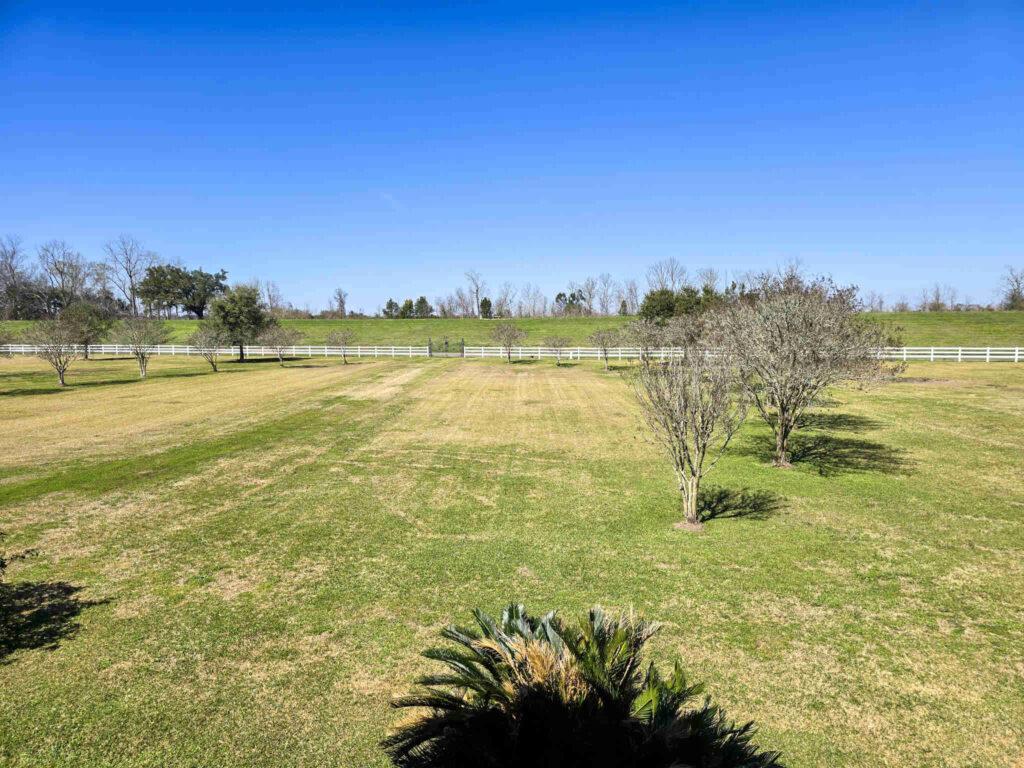
That stretch of the Mississippi between New Orleans and Baton Rouge earned the nickname “plantation alley” for good reason. Sugar cane fields and plantation homes once ran nearly unbroken along the river. A good number of those homes are still standing and telling their histories to anyone who shows up.
Most of the stops along River Road work as standalone attractions. St. Joseph and Felicity don’t, and that’s the point. These neighboring homes are almost always toured together. Their histories, their ownership, and honestly, their whole reason for existing are tangled up in each other. Seeing one without the other leaves half the story on the table.
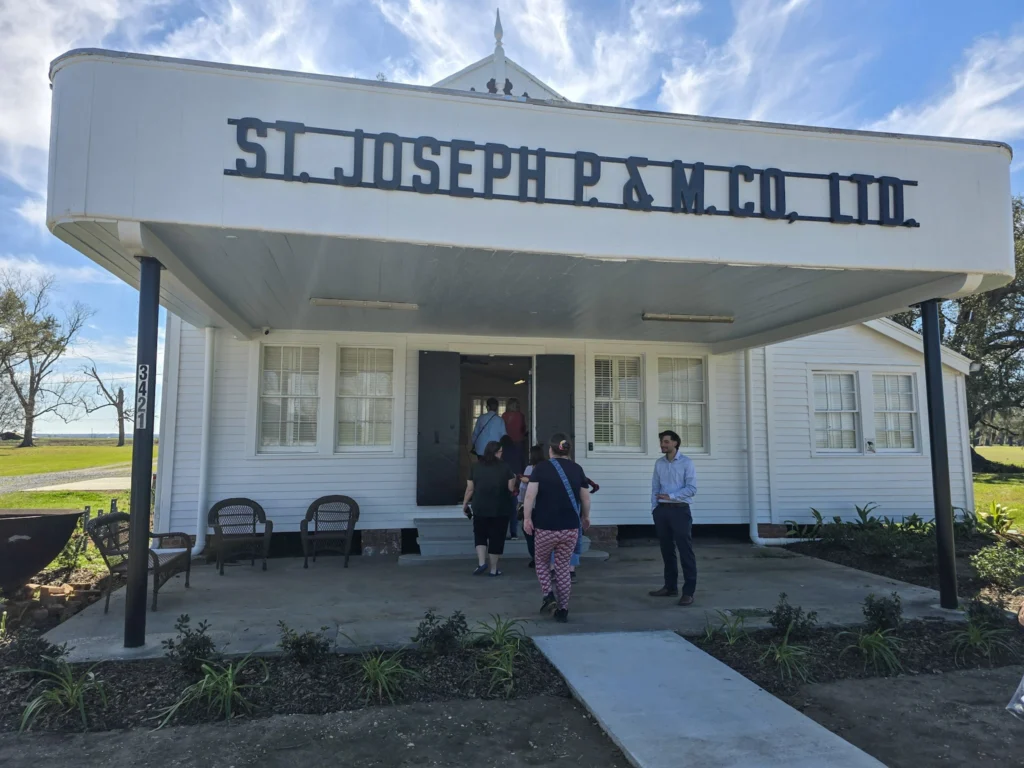
If you like a road trip that rewards curiosity, this is a good one. In a single afternoon, you get family history, sugarcane history, architecture, film locations, and the harder truths of slavery and its aftermath. All of it under one roof, or rather, two roofs a short walk apart.
How St. Joseph and Felicity Became One Story

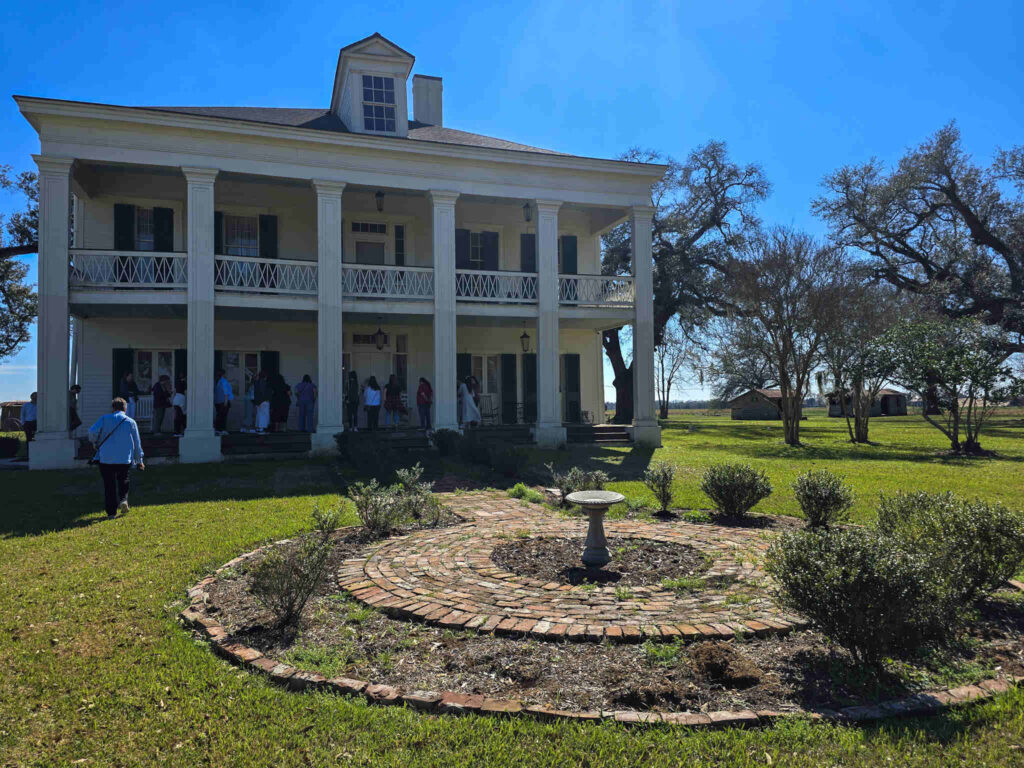
St. Joseph and Felicity are not just two old homes that happen to sit near each other. They became one connected plantation story through the Waguespack family. Joseph Waguespack bought St. Joseph and about 1,000 acres in 1877. Two decades later, his grandson Saturnin Waguespack bought Felicity and 1,500 more acres. By 1901, the family had folded both properties into a single corporation and started running them as one operation.
That detail is the reason the tour works the way it does. This isn’t a house frozen at one moment in time. It’s a family story that kept going, and in a lot of ways, still is. The plantations remain family-owned, sugarcane is still part of the business, and descendants are still involved in running things today.
If you want current tour details, the official Felicity Plantation page is the most direct source.
From wealthy sugar families to one plantation company
Before the Civil War, this stretch of St. James Parish was one of the wealthiest corners of the country. The Mississippi River worked as the highway, the freight line, and the business connection, all in one. Land near the river was worth holding on to because it kept the trade moving.
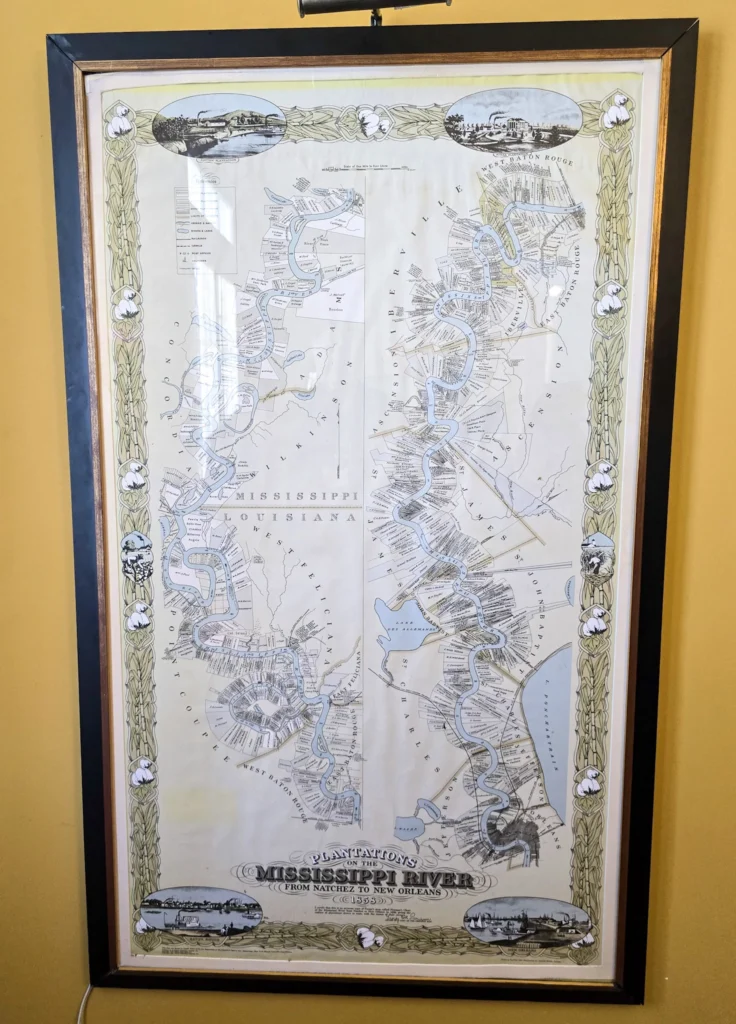
Felicity’s earlier story runs through Valcour Aime, one of the great sugar planters of antebellum Louisiana. He was tied by marriage to the Roman family, the same family linked to Oak Alley down the road. Wealth tended to stay close in this part of the state, moving through marriages and land deals more than open markets. That pattern shaped both plantations.
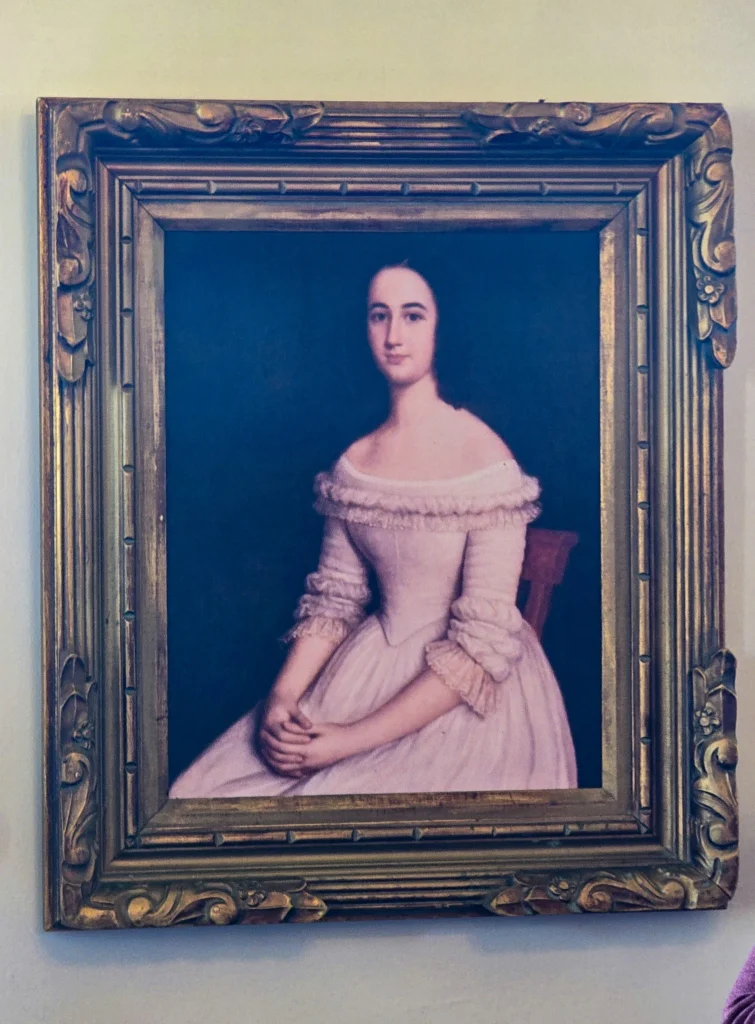
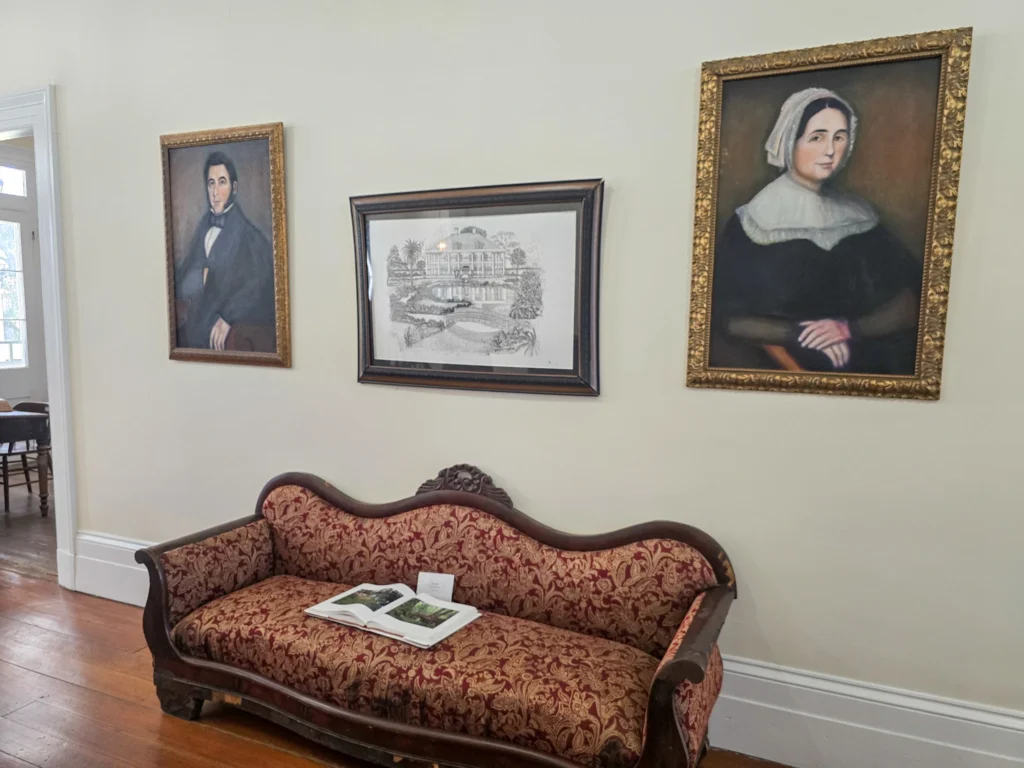
Aime built Felicity House in the mid-1840s as a wedding gift for his daughter, Felicity. Across the cane fields stood his own home and gardens, nicknamed “La Petite Versailles” for its formal, mirrored-pond grandeur. You don’t need much more than that nickname to understand how much money once moved through this stretch of river.
What happened after the Civil War
The war wrecked plantation wealth up and down River Road. Families that once looked untouchable lost land, income, and standing almost overnight. Felicity’s branch of the Aime family lost the house before the century was out, and it passed through other owners before the Waguespacks bought it in 1899.
The human side of that collapse is what stays with you longer than any date.
Many plantation owners, including the Aime family, left for their New Orleans homes. They became merchants and shopkeepers. Felicity, some of her sisters, and their brother eventually worked as salespeople in a candy shop in the French Quarter.
Many formerly enslaved people stayed on these plantations after emancipation, because leaving was dangerous and options were limited. Some went on to become paid plantation workers on the same land where they had once been enslaved.
That fact changes how you walk through the rest of the tour. It wasn’t a neat break between one era and the next. It was a hard, uneven transition, and to their credit, the guides don’t soften that.
Touring the Two Houses Side by Side
The visit is guided, room by room and porch by porch, and that structure works in its favor. There are furnished interiors, grounds, outbuildings, cabins, and a few spaces still under restoration. Photography is generally allowed inside and out, which I appreciated, since I wanted to go back through the details later.
Touring both homes on the same day helps the bigger picture click into place.
St. Joseph feels older, plainer, and more workmanlike. Our guide described it as a Creole cottage with a twist, since it has a center hallway, which is unusual for a true Creole cottage. The house is also raised off the ground, a practical response to river flooding before levee control improved
The small details are what stuck with me. Ventilation cutouts, called “weepers,” let hot air escape, and our guide mentioned that most visitors have never seen them anywhere else. The original cypress flooring and the raised structure are a reminder that climate shaped these houses as much as style did.
Even the fireplaces have a story. St. Joseph used coal-burning grates instead of wood, which surprises most people. Coal, and even ice, came down trade routes connected to the river, a small detail that says a lot about how wealthy River Road plantations actually operated.
Felicity’s Grander Rooms and Family History
Felicity is the showier of the two. It blends Creole elements with Greek Revival and English influences, and it feels more formal the moment you step inside. Construction finished in 1847, before the Civil War, and like most antebellum houses in the region, it was built with enslaved labor.
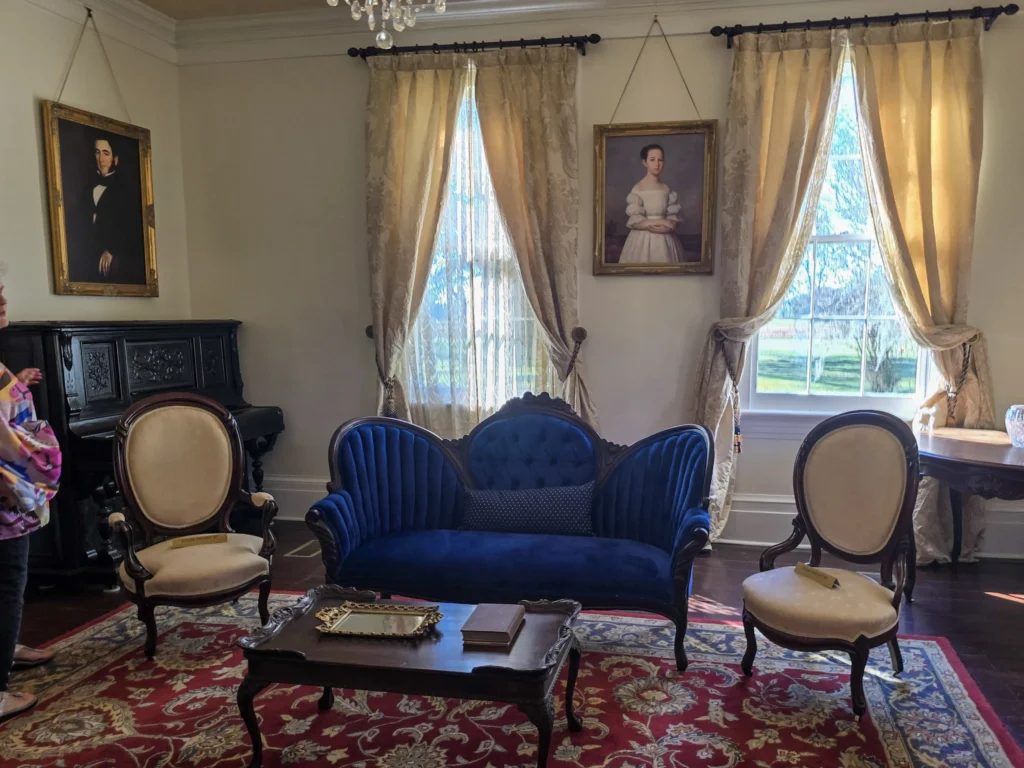
Inside, though, it still feels lived-in rather than roped off. One of the best-known features is a pink Italian marble mantel. Some closets were later converted into indoor bathrooms during the Waguespack era, one of those small, practical changes that make an old house easier to picture as an actual family home rather than a museum piece.
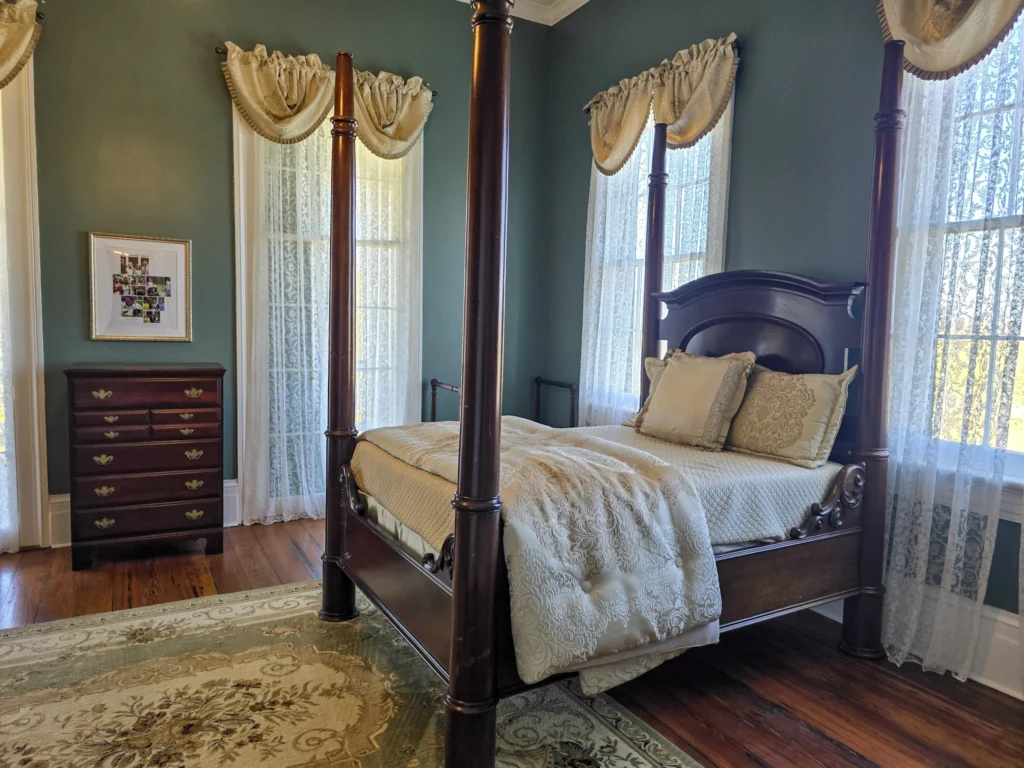
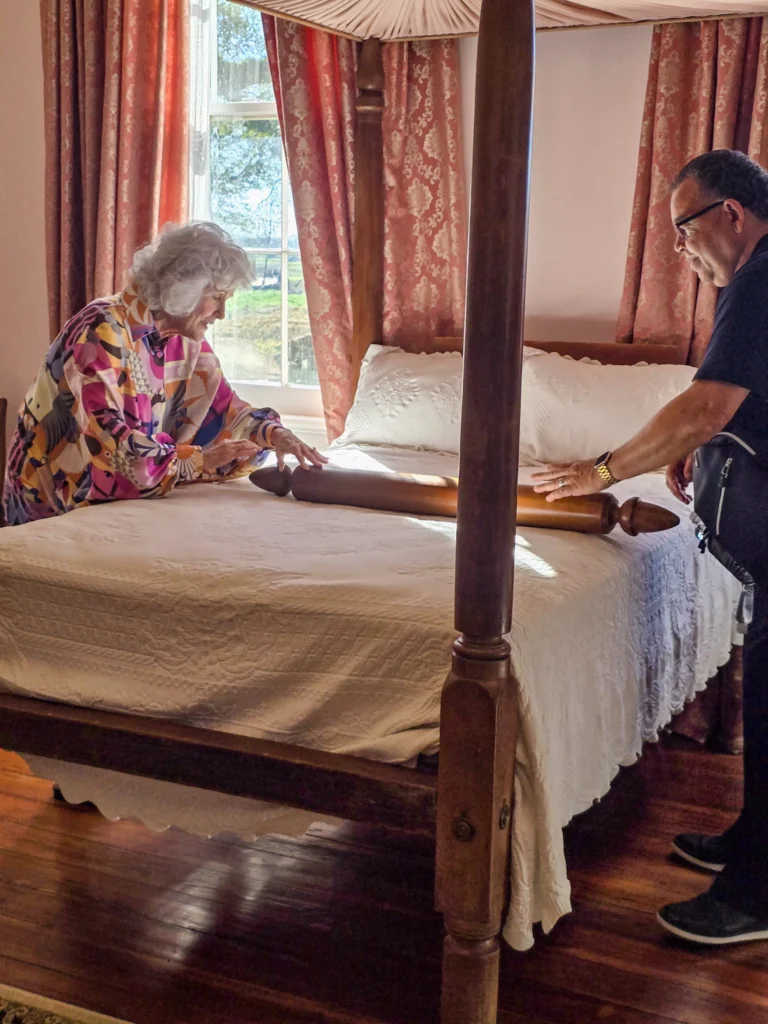
In one of the bedrooms, our guide showed us how the household staff used to roll the mattresses every day to smooth out the lumps that formed overnight. It’s a small detail, but it’s the kind of thing that makes a 175-year-old house feel suddenly close and specific.
The Waguespacks never treated Felicity like a museum piece. Family gatherings filled the house for decades: holiday meals, Easter celebrations, long visits from a large Catholic family that kept the rooms in steady use well into the modern era.
The Cabins, the Workers, and Life After Emancipation
The strongest part of either tour isn’t a single grand room. It’s the accumulation of small, specific details: a carved banister, a chair that made its way back home, a kitchen restored to its original spot. Those are the things that keep a two-hour tour from ever feeling flat.
The original cabins add context you don’t get from the main houses alone. Some were built as two-family structures, split down the middle so two households could live side by side. On these plantations, some of those cabins stayed occupied well after slavery ended, in a few cases into the late 20th century.
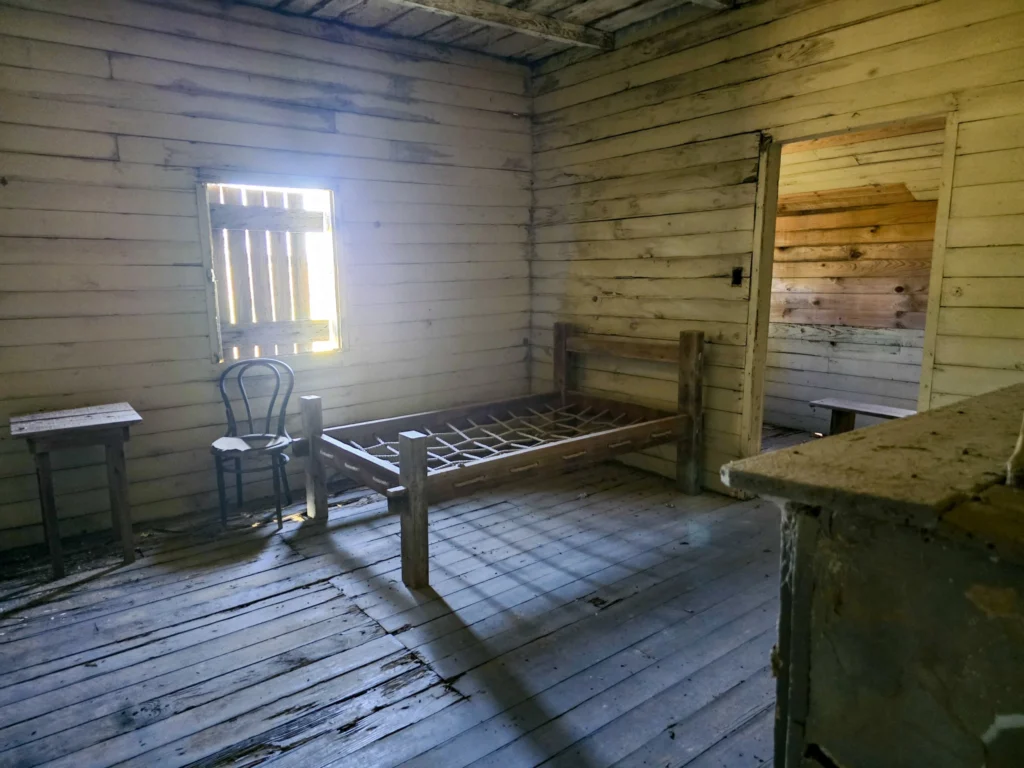
That long occupancy tells its own story about how little mobility many families had after emancipation. Tour guides also mention that some plantation workers lived rent-free, with the owning family covering water bills and other utilities. None of that erases the history, but it does show how the labor community stayed rooted to this land for generations.
One name from the cabins has stuck with me since the tour: Labora, remembered as a cook and baker known for her pies, which she shared throughout the community while neighbors brought her ingredients in return. It’s a small story next to everything else on the tour, but it’s the one that gave the place a human scale for me.
The Furniture and Heirlooms That Are Actually Original
Not everything in either house belongs to the earliest owners, and the guides are upfront about that. Much of what’s on display is period-appropriate rather than original to the family. I appreciated the honesty of that, honestly. It’s more convincing than a house that claims everything is untouched.
Still, a handful of pieces do trace back to the families themselves. At St. Joseph, guides point out a plantation desk and a chest tied to the home’s earlier history. At Felicity, descendants have helped return items over the years, including a set of matching chairs said to have belonged to Felicity herself.
St. Joseph’s mourning room had clothing on display, and standing next to it, in all of my five-foot-five-and-a-quarter-inch glory, made it obvious how much taller people are on average now compared to 150 or 200 years ago.

That slow trickle of returned objects gives the rooms more weight than a fully staged interior ever could. These aren’t intact time capsules. They’re family places that lost things, got some of them back, and kept going anyway.
Why Filmmakers Keep Coming Back
A lot of visitors first hear about these plantations through film and television, which tracks. The houses look cinematic, and the grounds still hold a strong period feel even now.
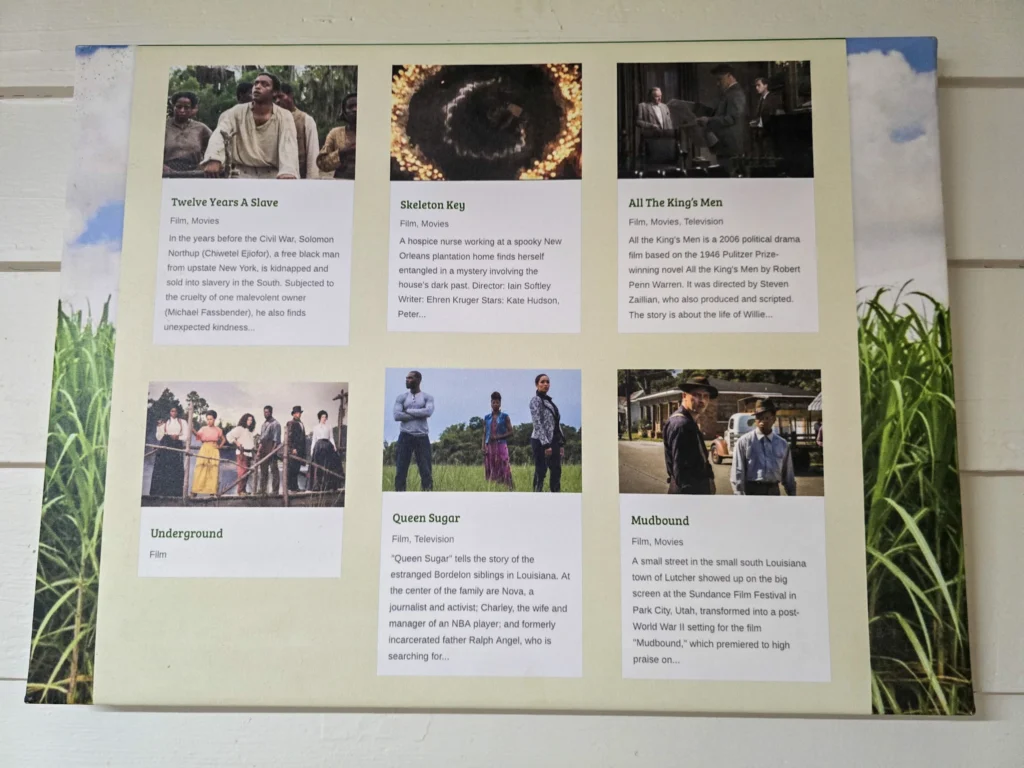
Felicity and St. Joseph have shown up in a surprising number of productions. Guides mention the remake of Roots, 12 Years a Slave, Mudbound, The Burial, Skeleton Key, Grand Isle, All the King’s Men, and Queen Sugar. Some productions used the main houses. Others used the grounds, the cabins, or nearby outbuildings.
You can still spot traces of that work if you know where to look. A film crew darkened some of the floors. Old wallpaper from a shoot is still visible in parts of Felicity.
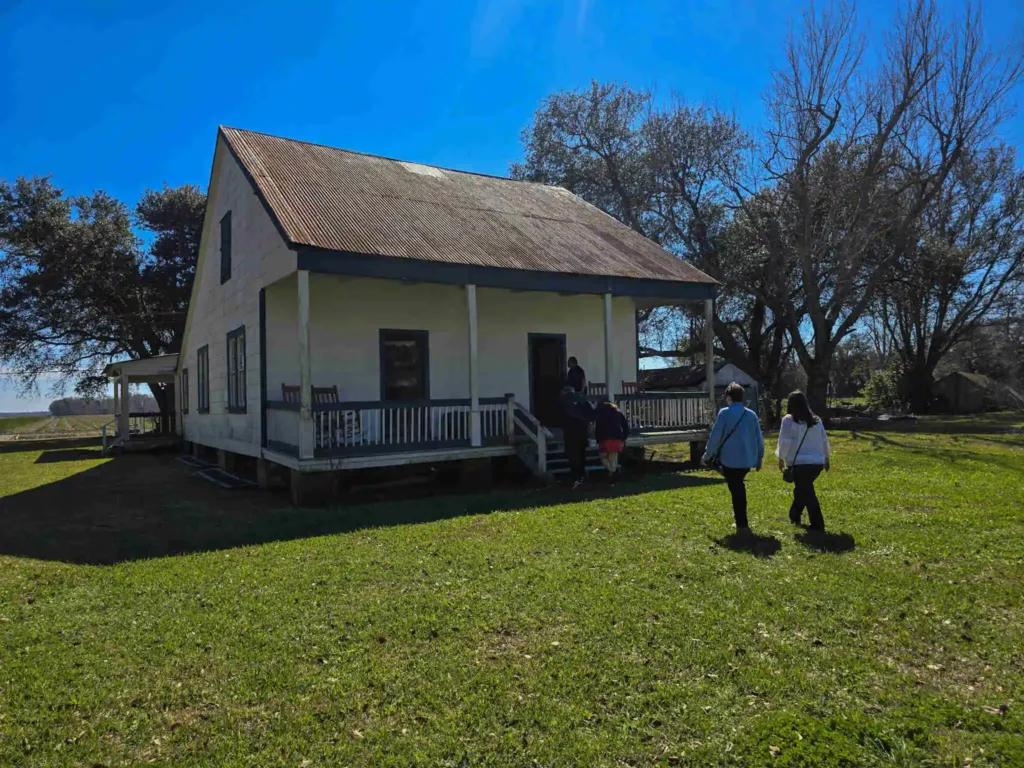
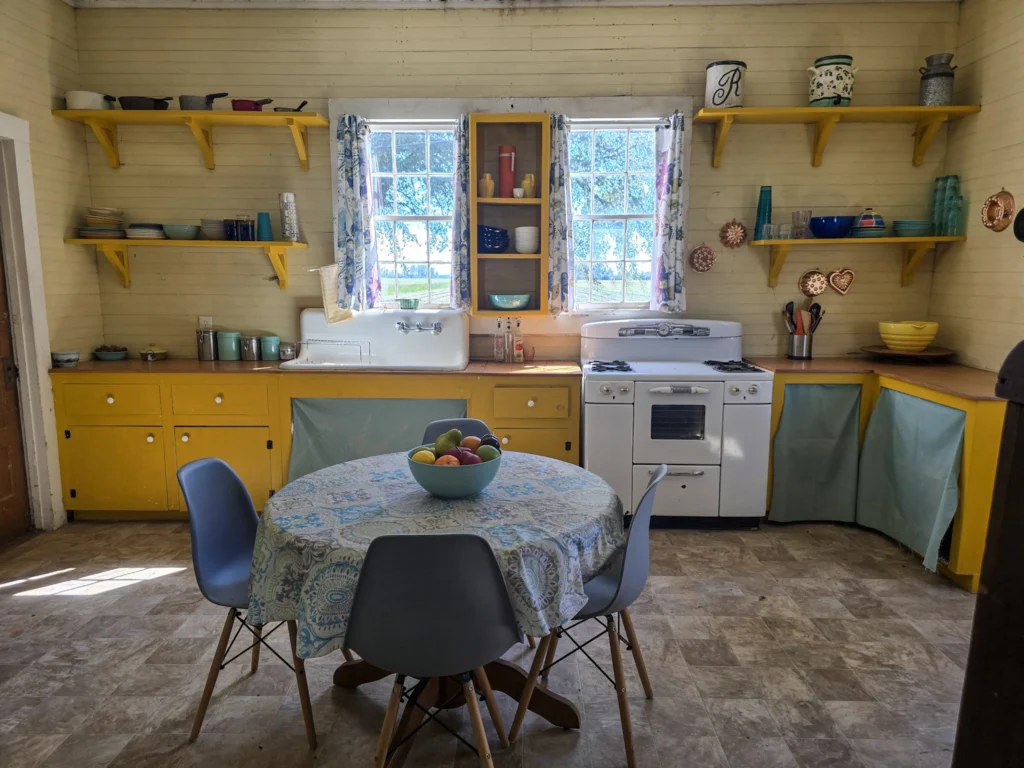
The cottage used for Ralph Angel’s home in Queen Sugar was left almost exactly as the production crew arranged it, right down to the clothing and everyday objects still sitting inside.
That layering adds something to the tour that a lot of historic homes don’t have. These houses are historic, working film sets, family properties, and ongoing restoration projects, all at the same time.
Restoration, Hurricanes, and Why the Work Never Really Stops
Preservation here is ongoing, not finished, and that shows the moment you notice a scaffold or a patched wall. Considering how much work can be needed by our modern homes, it is no great surprise.
Felicity ran into serious foundation trouble after the last family member living there passed away in 2008. Relatives found the house tilting and at real risk of splitting apart. They approved major repairs, spending well over half a million dollars to stabilize the structure with concrete supports and adjustable jacks.
Hurricane Ida added more damage in 2021, especially to the cabins, the grounds, and restoration work already underway. Some gardens and outbuildings are still being rebuilt, and tour routes may shift depending on what’s in progress. For the latest updates, the plantation’s Facebook page is your best bet.
Standing in a house that’s still, quite literally, being held up by jacks and concrete supports puts the whole visit in a different light. These aren’t frozen displays. They’re old Louisiana houses in a storm-prone place, still being cared for by the same extended family that’s been here for over a century.
Plan Your Visit
St. Joseph and Felicity Plantations sit along Louisiana’s River Road in St. James Parish, an easy add-on if you’re already routing between New Orleans and Baton Rouge. Tours typically cover both homes together, so budget a couple of hours. Check the official Felicity Plantation page for current hours, ticket prices, and tour times, and follow the plantation’s Facebook page for updates on restoration work or route changes.
If you’re building out a longer family trip through south Louisiana, pair this stop with something more hands-on for kids in New Orleans, like the Louisiana Children’s Museum, to balance a history-heavy day with something more interactive.
Why This Two-House Story Is Worth the Detour
I keep coming back to that image of the staff rolling the mattresses every morning, smoothing out a night’s worth of lumps in a house that’s still standing almost two centuries later. It’s such a small, ordinary detail, and it’s exactly the kind of thing that makes a place like this feel real instead of staged.
Seeing St. Joseph and Felicity together gives you more than one pretty house. You get sugar history, architecture, film history, family continuity, and a clearer, harder view of how slavery and its aftermath shaped this stretch of the river.
If Southern history interests you at all, touring these two side by side gives you a fuller picture than either house could give on its own, and honestly, a lot more to think about on the drive home.