Visit the Maritime and Seafood Industry Museum
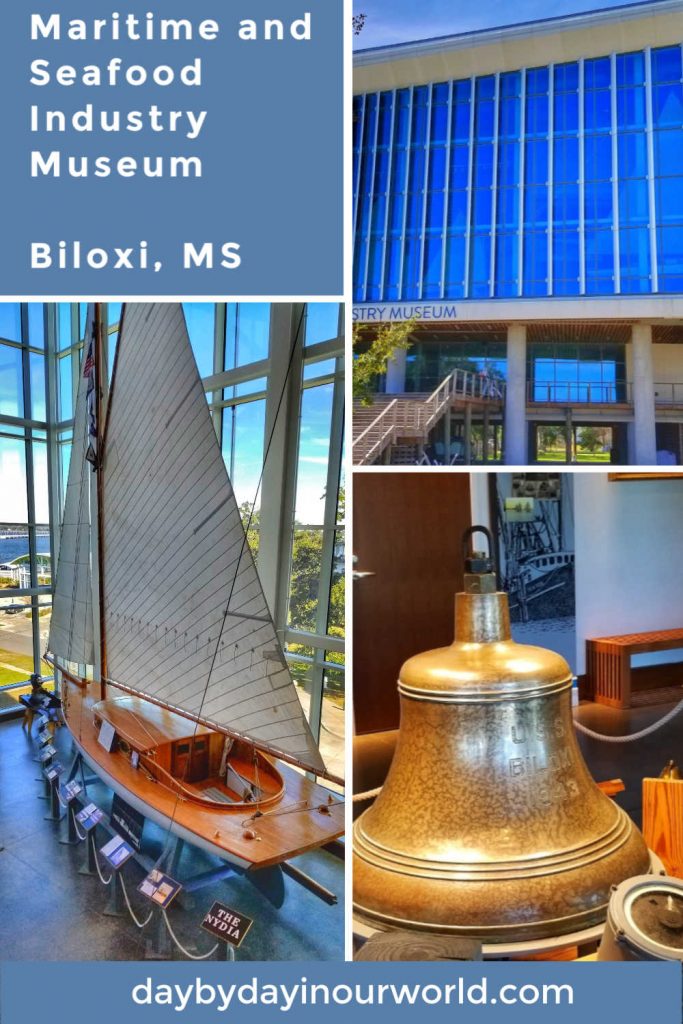
The coast is in my blood. Being near or on the water helps me to feel recharged. With this love of the water, I was excited to visit the Maritime and Seafood Industry Museum in Biloxi with the boys.
I spent many of my formative years around the Gulf Coast of Mississippi.
For a few of those years, we lived in Long Beach.
Then it was Slidell with trips over to the coast.
And finally, I made several road trips with friends while attending the University of Southern Mississippi in Hattiesburg.
But, my adult memories of Biloxi were more about the casinos where my father liked to go for lunch at times.
Table of contents
Visiting the Maritime and Seafood Industry Museum

This museum is located close to Biloxi Bay. We parked and walked a bit along the water before going inside.
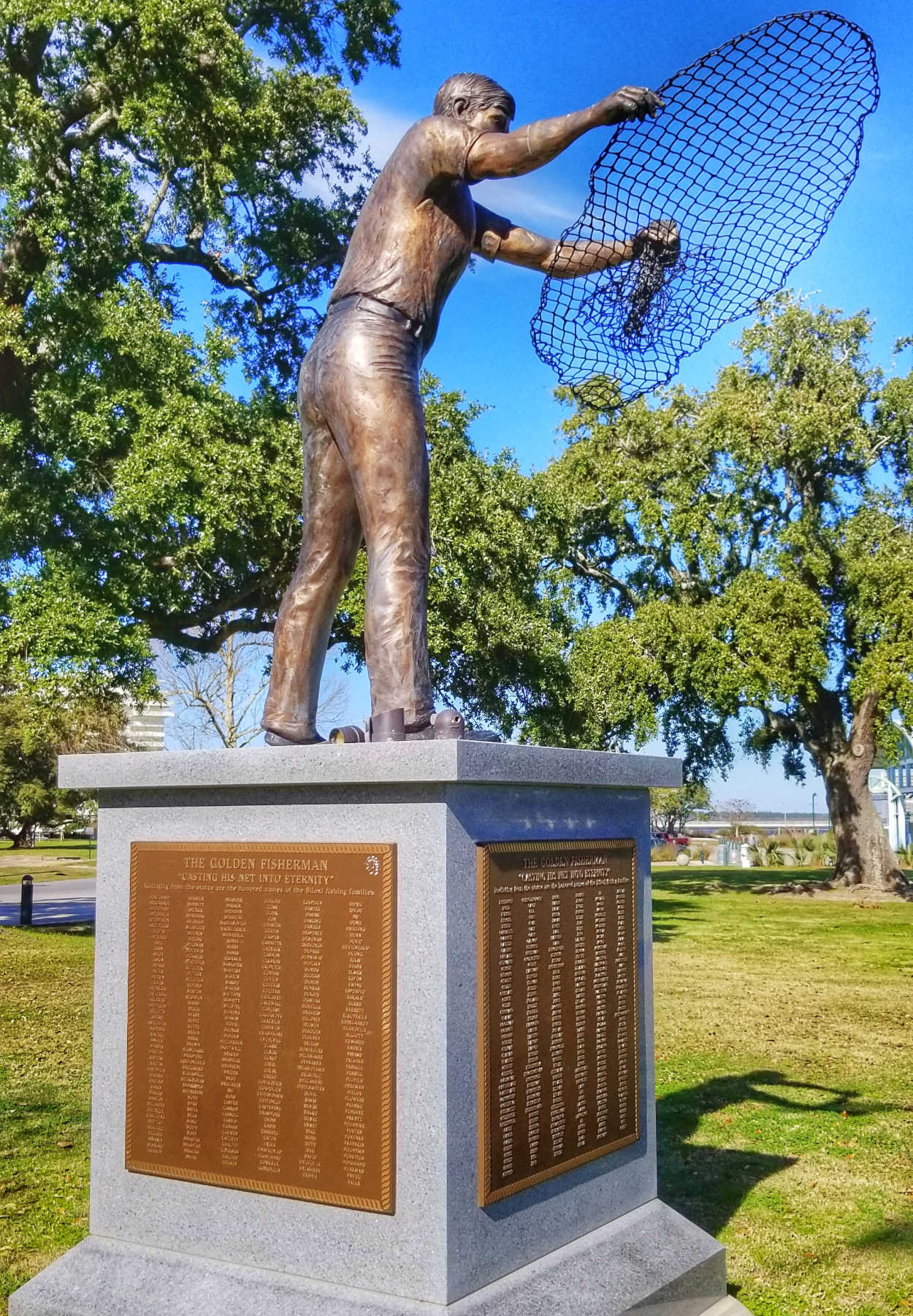
There is a neat statue in front of the museum as well as a small submarine. The statue is called The Golden Fisherman “Casting His Net into Eternity.”
I found the wooden steps up to the museum entrance to be a nice touch.
You’ll need to first pay your admission at the desk to the left of where you enter the building. Bring your AAA card if you are a member for a discount. Also, they participate in the NARM reciprocal program.
Exhibits are on multiple floors with the option of an elevator or stairs.
First Floor of the Museum
Behind the counter, you will find a gift shop and the main restrooms.
To the right of the entry is exhibit space that showcases maritime history for the area.

Additionally, there are artifacts and static displays about the USS Biloxi.

Second Floor of the Museum
When you first ‘land’ on the floor, your breath may be taken away by a gorgeous sailing boat that won numerous races along the Gulf Coast.
The boat is called the Nydia. This sloop was built out of cypress and steam-bent oak at the Johnson Shipyard around 1898.
The photo below was taken by me from the 3rd floor in an attempt to capture more of the sail.

Off to the side, there is a bench in front of a TV which runs a short documentary about the boat, its builder, and the owners.
More boats span the initial section leading you to a spot that explores shrimping. A small room off that area has chairs and a documentary about the shrimping industry. It is very interesting that the lowly shrimp that barely netted men a profit years ago is now (relatively) expensive to purchase.
Our visiting guest found the Lapeyre Automatic Shrimp Peeling Machine (1979) to be one of the most interesting parts of the exhibit.

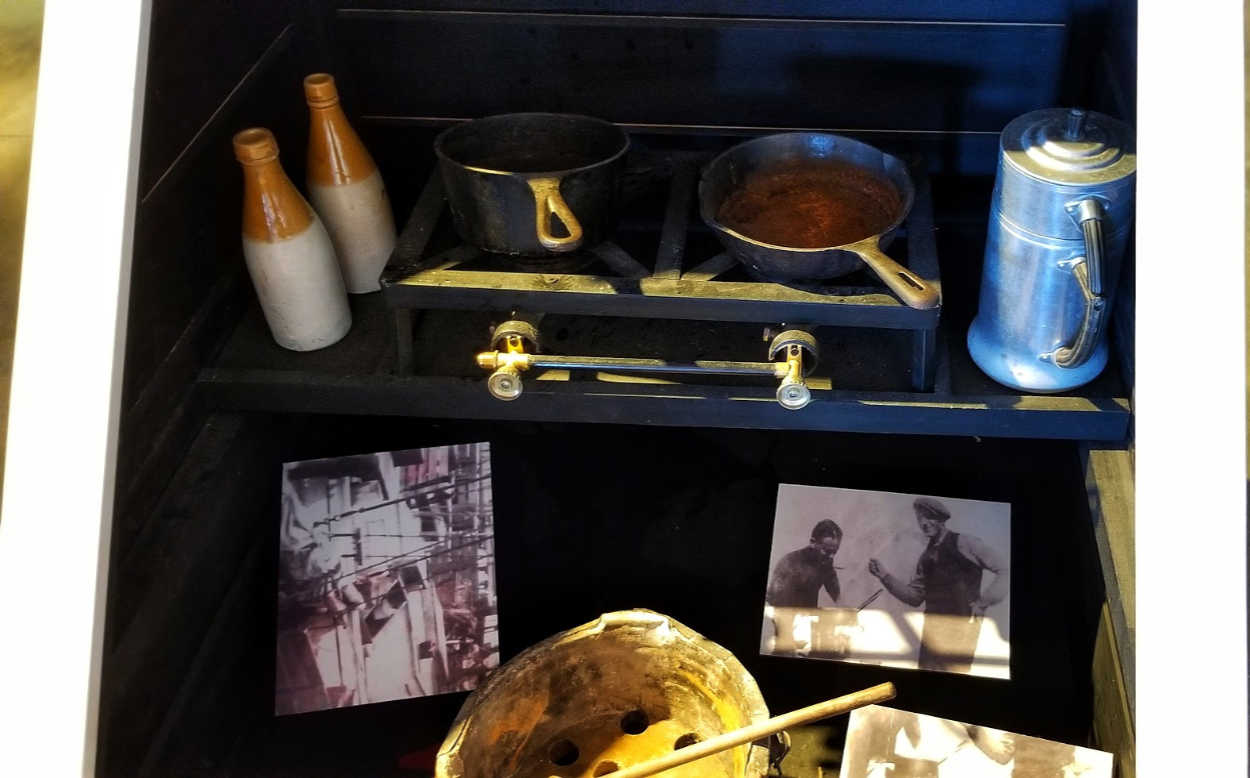
I found the concept of the Gallery Box for cooking all the meals intriguing.
What got me thinking was how they didn’t toss out food. Rather, they added TO the pot with each meal.
Another room has exhibits of tools used to make different vessels. A large static display of all the different boats used in the area over the years.
Third Floor of the Museum
On this floor, you can visit an exhibit showcasing information and images of the barrier islands. I have distinct memories of visiting Ship Island as a teen for biology class.
Around this area are some examples of wildlife you’ll find. The taxidermy piece below is amazing.

There is also section with more information about the seafood industry. Aside from shrimp, there are many who collect and sell oysters.

Finally, there is a room dedicated to hurricanes. Static displays cover the walls with a documentary running on a TV in one corner. There are chairs available to sit and watch.
Overall, this was a great addition to our homeschool learning opportunities for my youngest son. And it reminded me of so much that I love about the Gulf Coast of Mississippi.
Would you or someone in your family enjoy a visit to the Maritime and Seafood Industry Museum in Biloxi?
What part of our museum experience most intrigues you?
More Southern US Travel Posts
Planning to Visit the Southern United States?
Here are some more posts to check out.
Hotel Mazarin: Luxury in the New Orleans French Quarter
Visiting the Audubon Butterfly Garden and Insectarium (New Orleans)
Visiting the French Quarter (New Orleans)