Halibut Creole Using Olive Oil for Everyday Cooking
I have been, or can be if you click on a link and make a purchase, compensated via a cash payment, gift, or something else of value for writing this post. Regardless, I only recommend products or services I use personally and believe will be good for my readers.

Preparing meals is an everyday chore. After all, my family of growing boys and a hungry husband expect to be eating. Unlike them, I have struggled off and on with my weight and usually try to keep things ‘light’ Yet, I also want to be serving dishes that they’ll love. Using olive oil for everyday cooking is one way that I help please their palates while continuing to work on my waistline.

Olive Oil for Everyday Cooking: Why?
When it comes to cooking for my family, I can not get away with feeding them like rabbits. I’d have a major rebellion on my hand if I suddenly excluded all forms of fat from our diet. Besides, fat is something our body needs…we just have to be conscious of our choices. At my house, we use olive oil for everyday cooking with the moderate use of butter for flavor as well as coconut oil.
Now, I have a fetish for cookbooks or surfing the internet for inspiration when it comes to dinner. Some of the recipes I find use fat sources I just am not comfortable using. However, there is so much documentation out there about the health benefits of olive oil (which is primarily comprised of monounsaturated fatty acids), that I feel quite comfortable using it for everyday cooking.
Olive Oil for Everyday Cooking: How?
For some recipes I fine, I can easily substitute olive oil for the other suggested products (e.g. vegetable oils.) I’ve used olive oil for the fat in my homemade bread on occasion, but have to be conscious to not use extra virgin olive oil as the flavor is more noticeable. (Basically, the extra virgin is the first press oil and therefore has a stronger flavor than oil from a later press.)
Not all olive oils are the same, so you need to find what products will work best for you. On a recent trip to Walmart, I found the new STAR Usage Pairings Olive Oil on the shelf. They have three different varieties that are paired to work with specific types of foods.
I have to admit that certain family members gave me odd looks. In their minds, oil is oil. But, as the labels for these products reveal, each one is from a different variety of olive and will have a varied impact on your finished product.
Arbequina, obtained from the first cold-press, made solely from arbequina olives, is for vegetables.
Hojiblanca, obtained from the first cold-press, made solely from hojiblanca olives, is for fish and poultry dishes.
Picual, obtained from the first cold-press, made solely from picual olives, is for beef or lamb and is reported to have a peppery finish.
For the first time out of the gate with this product line, I opted to purchase the Hojiblanca variety as fish and poultry are made often in the home. I left the store eager to make something familiar with a little twist for dinner … halibut creole.
Making Halibut Creole

While I used halibut to create this creole inspired dish, any mild white fish would do. I suspect I could do the same blend of vegetables and seasoning with shrimp or crab as well.
For those unfamiliar with creole cooking, this dish is NOT really spicy. (Several friends confuse Creole and Cajun cuisines as being the same when they really are not!) Bonus is that I can recreate this dish for a potluck and label it gluten-free, too!

As you can see from the image above, this dish is one that requires a little bit of prep work and then the cooking goes quickly.
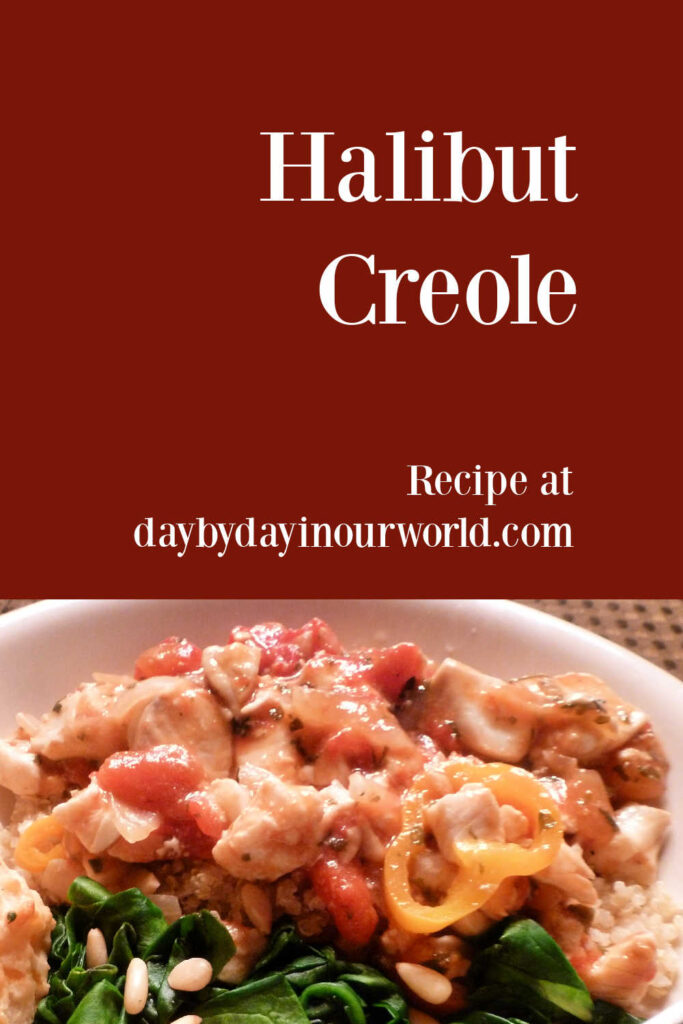
I elected to serve this dish over a bed of quinoa instead of the traditional rice. A nice salad would help round out the meal, or you could go for some cooked greens as I did (slightly steamed spinach with pine nuts.)

Halibut Creole
Easy to make creole dish featuring the mild and firm Halibut fish.
Ingredients
- 1 pound halibut, cut into 1 inch pieces
- 1/2 cup onion, chopped
- 1/2 cup pepper (green is preferred), chopped
- 2 cloves of garlic, minced or pressed
- 1/4 cup olive oil
- 1 can (16 oz.) diced tomatoes
- 1 Tbsp. dried parsley
- 1 Tbsp. chicken broth powder ( or instant bouillon granules)
- 1/4 tsp. hot pepper sauce, like Tabasco
- 1 Tbsp. cornstarch or arrowroot powder
- 1 Tbsp. cold water
- 2 cups of rice or quinoa cooked per instructions
Instructions
- Heat your skillet and add the olive oil. Once the oil is warmed, add the onion, pepper and garlic, sauteing until tender. Add the can of tomatoes (undrained), parsley flakes, chicken broth powder and hot pepper sauce. Cover the skillet and simmer for 10 minutes.
- Blend the cornstarch and cold water. Add to the tomato mixture, stirring and cooking until it the sauce has thickened.
- Add the diced halibut to the tomato mixture, stirring to coat. Bring to boiling, cover and then reduce heat to simmer for 5 to 7 minutes. The dish is done when the fish easily flakes with a fork.
- Serve over rice or quinoa.
Nutrition Information:
Yield:
4Serving Size:
1Amount Per Serving: Calories: 458Total Fat: 17gSaturated Fat: 3gTrans Fat: 0gUnsaturated Fat: 13gCholesterol: 68mgSodium: 167mgCarbohydrates: 46gFiber: 6gSugar: 3gProtein: 32g
Do you use olive oil for everyday cooking in your house?
This looks amazing! Thank you for sharing! #client
Yummy, will keep this for some time
Yum, looks delicious! I’m a big creole fan.
That recipe looks so good! Thanks for sharing. I’m pinning it to my personal recipe board! #client
I use olive oil a lot. I’ll have to look for that brand. Great recipe too!
I use olive oil daily — thanks for this new Halibut recipe — I can’t wait to try it!
OH YUM!! This looks so good.